Provençal garden around a swimming pool
- Surface: 2,500 m²
- Materials: exotic wood, powder-coated steel, local stone, bamboo canes
- Species: acanthus, yarrow, fatsia, yucca, agapanthus, magnolia, bay laurel, star jasmine, lavender, dasylirion, etc.
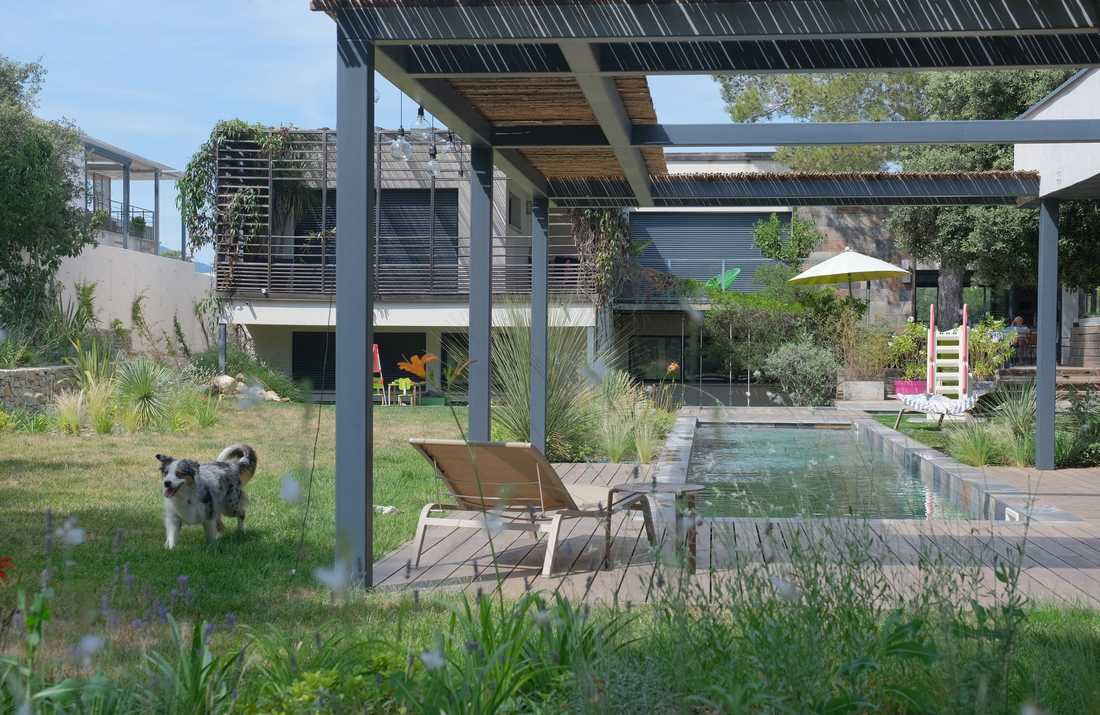
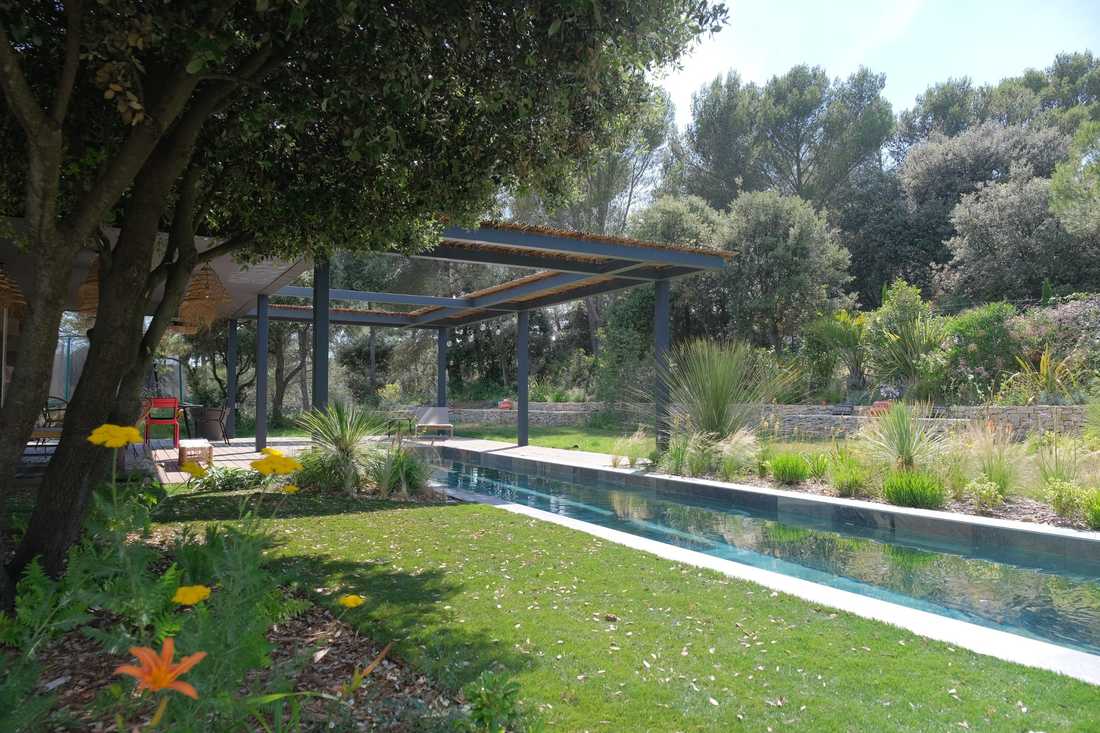
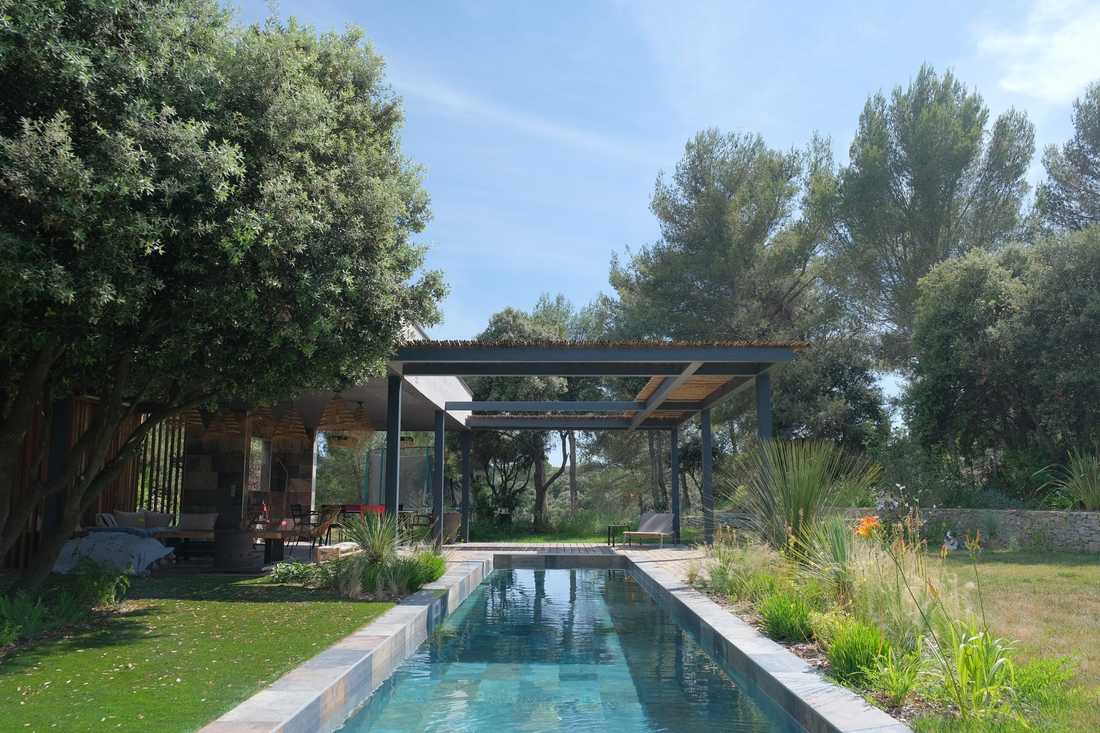
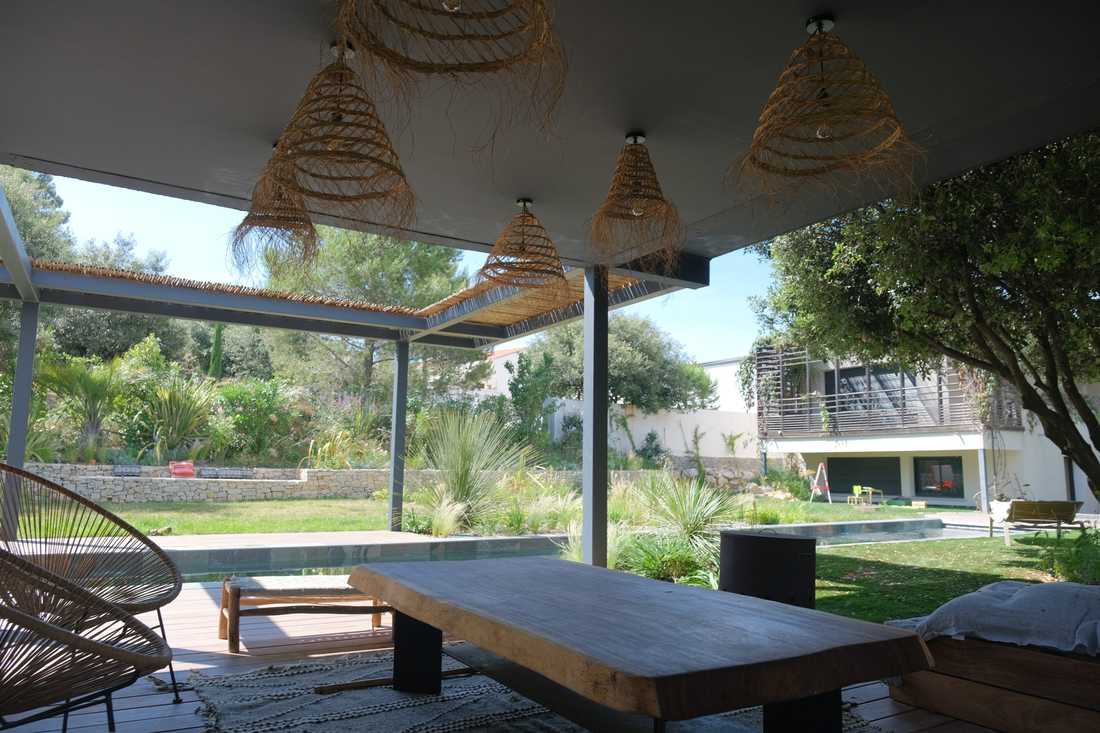
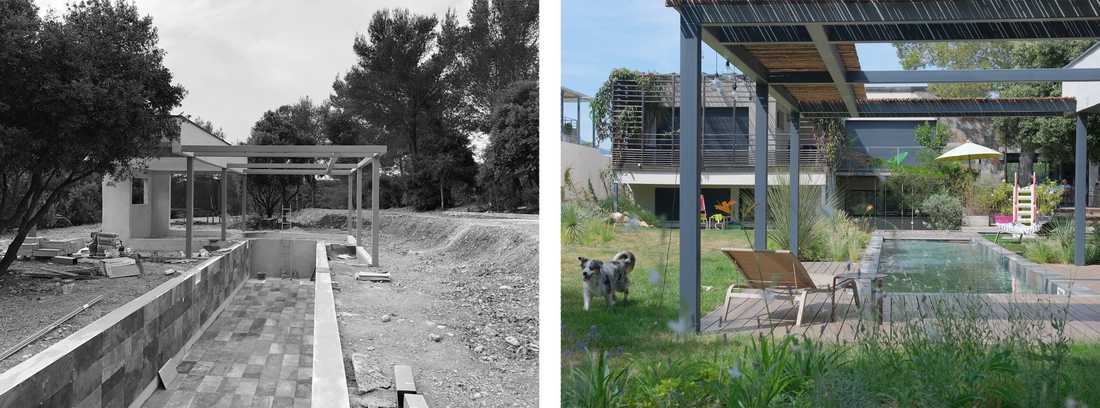
A few months after the construction of their house on the heights of a small Provençal village, the owners called upon Créateurs d'intérieur to design and landscape their garden. Extensively disrupted by the construction works, everything had to be rebuilt from scratch to create a living and coherent ecosystem.
A Blank Canvas
Thinking about this landscaping project began as soon as the new house was handed over. The plot had no proper garden: the land had been completely disrupted by the construction works, leaving very poor soil with little humus and many stones.
The landscape designer started from scratch, redesigning the levels, introducing topsoil, and planning the garden's organisation in every detail.
Creating a Living and Coherent Ecosystem
One of the project's objectives was to eliminate the artificial character of the land and create a living, coherent ecosystem, with a natural terracing approach and sustainable water management. The project involved restructuring the ground levels and introducing fertile soil for plant growth. A filter pond and a rainwater harvesting tank complete the installation.
To create a level area around the house, the landscape designer relocated an imposing earth embankment to the back of the plot. This reuse principle extends the garden while limiting the use of costly and polluting earthmoving machinery.
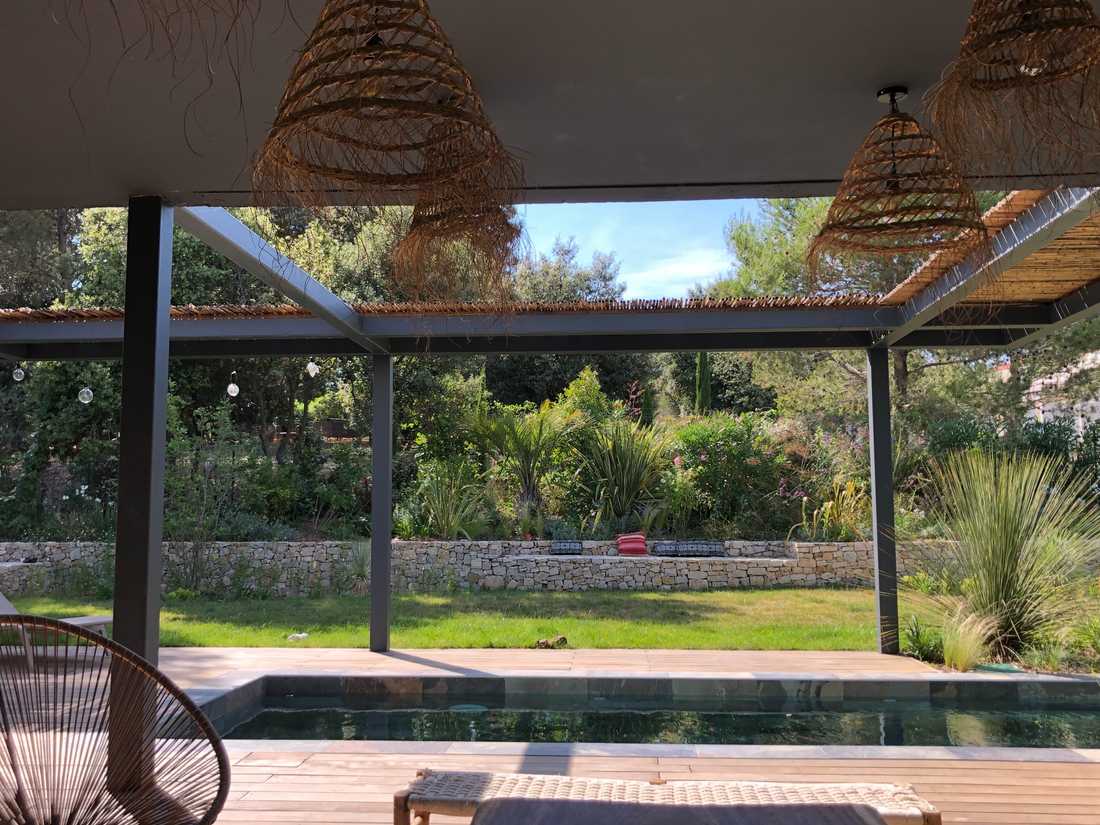
Along the plot, a dry-stone retaining wall incorporates various seating areas to create secluded spaces: shaded spots suited to reading, and others in full sun. The principle of this naturalistic garden is to achieve natural and wild atmospheres while minimising human intervention.
Provençal Vegetation
The landscape designer drew on local plants, particularly garrigue species and perennials suited to dry soils, to avoid automated irrigation and create a self-sufficient garden. Plants adapted to the Provençal climate were selected — species that do not need permanent watering and cope well with drought periods.
Among the species: acanthus, yarrow, heuchera, ferns, fatsia, yucca rostrata, bulbine, agapanthus, magnolia, viburnum tinus, star jasmine, trumpet vine, Banks roses, honeysuckle, lavender, rosemary, sage, lavatera, phlomis…
The dasylirion from the previous house was reintroduced into a border structuring the pool surrounds alongside other exotic plants, creating a contrasting play against the surrounding garrigue landscape.
A Swimming Pool and a Lap Pool
The presence of two pools is explained by a change in local planning regulations. Built to the standards of the time, the first basin is now dedicated to children; the evolution of regulations allowed for the creation of a lap pool.
To link the two pools, the landscape designer created a bridge in exotic wood (ipé). Other materials include a powder-coated steel pergola, a bamboo cane shade structure, and Fermob Luxembourg garden chairs. The coffee table and lampshades were sourced from brocantes.


